
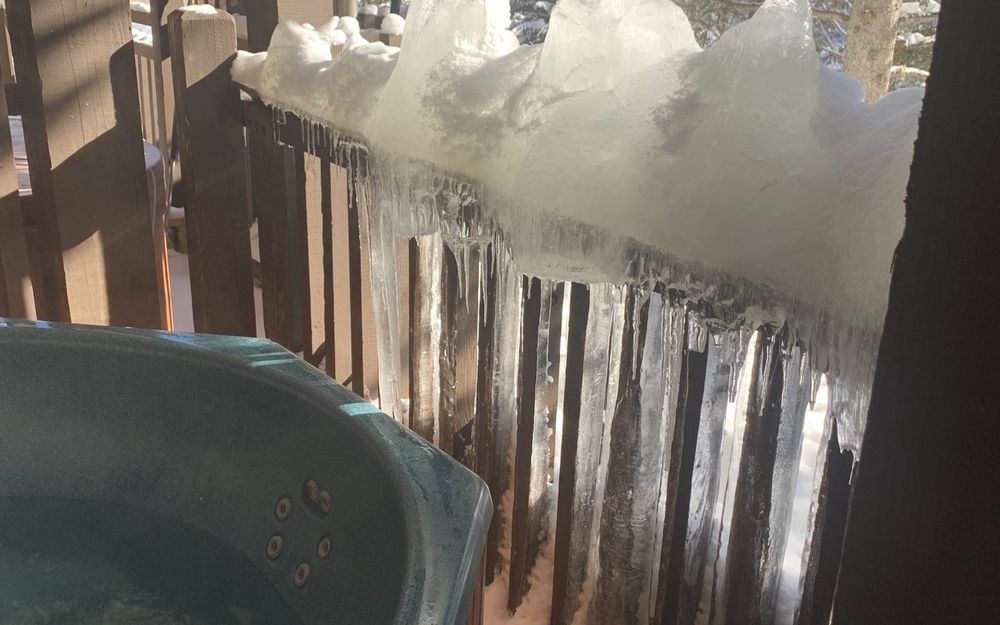
How to prevent freeze damage in winter
Of all the things that can go wrong with a hot tub, freeze damage is the one that keeps us up at night, because it's the one that can turn a perfectly good spa into a very expensive repair in a single cold night. Living and working where we do, we've seen it, and we'd much rather help you avoid it.
Here's the hard truth about our winters: when it drops well below zero for nights on end, a hot tub that loses its heat or its circulation is genuinely at risk. Water expands when it freezes, and there's water sitting in every pipe, jet, and pump in that cabinet. When it freezes and expands, it cracks whatever's holding it. That's not a dramatic warning, it's just physics, and it can happen faster than most people expect.
The one rule: keep it running and full
A healthy hot tub is remarkably good at protecting itself. As long as it has power, water flowing, and a working heater, it will keep itself warm through just about anything our climate throws at it, most tubs even have a built-in freeze-protection mode that kicks the pumps on when the temperature drops. The danger almost always comes from something interrupting that: lost power, low water, or a flow problem.
So the whole game is keeping those three things intact.
Keep the water level up
Low water is a sneaky freeze risk. If the level drops below the skimmer, the pump starts pulling air, circulation stops, and the heater cuts out, exactly the conditions freezing wants. Check the level regularly through the winter, especially after heavy use.
Keep the filter clean
We say this in every article for a reason: a clogged filter chokes off flow, and lost flow in January is a freeze waiting to happen. A clean filter is quietly part of your freeze protection.
Keep a good cover, latched
Your cover is holding an enormous amount of heat in. A waterlogged, torn, or poorly sealing cover lets that heat escape and makes the heater work overtime to keep up. Keep it in good shape, keep it latched, and clear heavy snow load off it so it seals properly and doesn't get crushed.
Power outages: the real threat
Mountain storms knock the power out. It comes with the territory. A brief blip is nothing; the tub rides right through it. An extended outage in deep cold is the situation to respect. With no power, the tub can't circulate or heat, and if the outage runs long while it's brutally cold outside, the water in the lines can start to freeze.
If you're facing a long outage in a hard freeze:
- If you have a generator, keeping the spa powered is the simplest protection.
- If the outage is going to be long and you have no backup power, the plumbing is at risk, and the safest move may be a full, proper drain so there's no water left to freeze. This isn't as simple as pulling the drain plug. Water hides in the lines, so it's worth a call.
Empty tubs and second homes
Two situations we see cause the most heartache up here. First, spas that get drained and then left sitting over winter. A "drained" tub often still has water trapped in the pump and plumbing, and that trapped water freezes just fine. If you're closing a spa down for the season, it needs a proper winterization, where the lines are actually cleared, not just a quick drain.
Second, second homes and rentals that sit empty between visits. Nobody's there to notice a cover blew open, the power tripped, or the level got low, until it's too late. If your place sits vacant in the winter, the single best insurance is having someone lay eyes on it regularly.
We spend a good part of every winter keeping tubs safe through exactly these conditions: regular check-ins on second homes, freeze calls during storms, and proper winterizations for the places that shut down until spring. If any of that would give you peace of mind, we're glad to help.